Teaching a five-year-old empathy without giving them a lecture
"How would you feel if someone did that to you?" is the right idea asked at the worst possible moment. Here is what to do instead.
Every adult reaches for the same sentence. A child does something thoughtless, and out comes: how would you feel if someone did that to you? It is a good question. It is also, at that specific moment, almost entirely useless, because the child is upset, defensive, and being asked to perform an act of imagination they cannot do while their heart rate is up.
Empathy is a skill, and like most skills it is learned in calm conditions and used in difficult ones. Trying to teach it mid-conflict is like trying to teach someone to swim while they are going under.
Separate the correction from the lesson
In the moment, do the boring thing: stop the behavior, keep it short, move on. 'We don't do that. Come here.' That is a correction, and corrections work best when they are brief and unambiguous.
The lesson happens later, when nobody is crying — at bedtime, in the car, on a walk. That gap feels wrong to adults because it separates the consequence from the act, but you are not administering a consequence. You are teaching a concept, and concepts do not go in while someone is dysregulated.
Give them a picture, not a principle
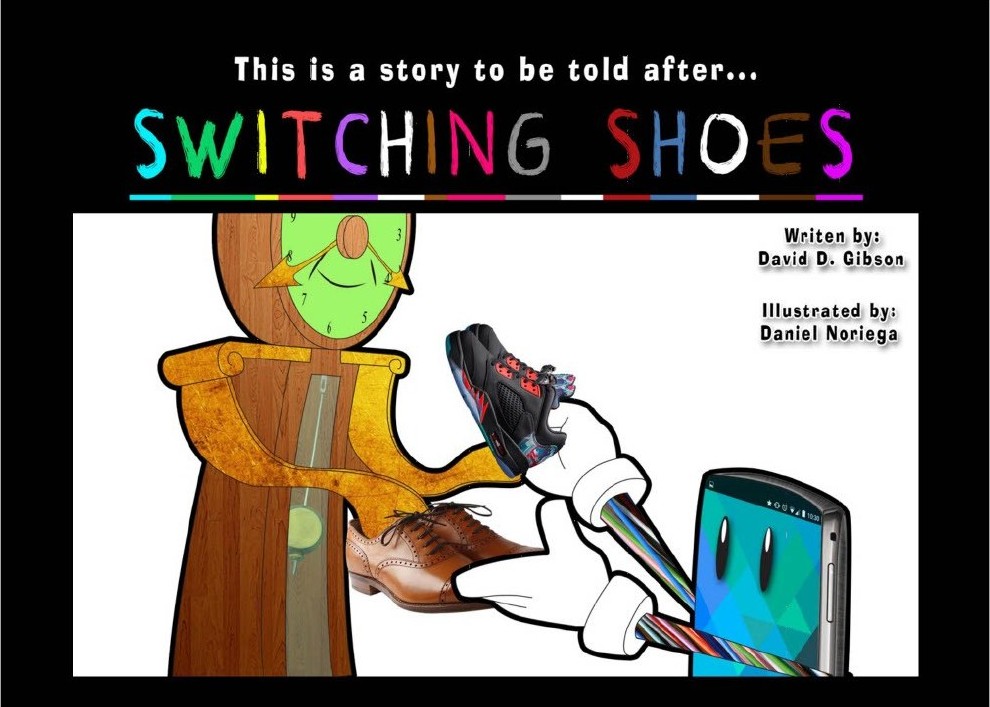
'Think about other people's feelings' is an abstraction, and abstractions are exactly the thing a four- or five-year-old is least equipped to hold. What works is a concrete image they can carry around: standing in someone's shoes, seeing through someone's window, holding someone's backpack for a minute.
This is why the idiom exists in the first place, and why making it literal — actually swapping shoes, actually trading places — lands so much harder than the metaphor does. Once a child has the picture, you can invoke it in one word later on, and one word is all you have during an argument anyway.
Narrate other people's insides out loud
Children do not automatically notice that other people have interior lives running in parallel to theirs. You can just tell them. Not as a lesson — as observation, in passing, about strangers and characters and yourself.
'That man looks like he's in a hurry.' 'I think she's nervous about her first day.' 'I was grumpy this morning and it wasn't about you, it was because I slept badly.' Done casually and often, this builds the habit of assuming there is a reason behind behavior, which is the actual foundation the fancier stuff sits on.
Use stories, because stories are practice with no stakes
A book is the only place a child can be inside someone else's experience with nothing on the line. There is no argument to win, no consequence pending, nobody watching to see whether they will do the right thing. That is what makes fiction such an efficient vehicle for this: the imaginative work happens for free, as entertainment.
The useful move is not to explain the moral afterwards. It is to ask what a character knew and did not know. 'Did he know she was already upset?' 'What did she think was happening?' Those questions build the specific mental move empathy requires — modeling what is in someone else's head — without ever using the word.
Let them see you get it wrong
Children learn far more from watching how you handle being unfair than from any instruction about fairness. If you snap at someone, say so afterwards, in front of them, plainly. 'I was short with your brother earlier. That wasn't fair and I told him so.'
This is uncomfortable and it is the single highest-leverage thing on this list. It demonstrates that noticing you got it wrong is normal adult behavior rather than a humiliation, which makes it enormously more likely they will do it themselves.
Expect it to be slow
Perspective-taking develops over years, not weeks, and it develops unevenly — a child can be strikingly thoughtful about a friend on Monday and completely oblivious to their sibling on Tuesday. That is not backsliding, and it is not a sign the message is not landing.
The realistic goal for the early years is not a consistently empathetic child. It is a child who has the concept available, in a form they can picture, so that when they are eight and ten and fifteen there is something already there to build on.
None of this is fast. But the alternative — asking a distressed five-year-old to imagine someone else's feelings while they are overwhelmed by their own — is not slow, it just does not work. Teach it calm, teach it as a picture, and let the stories do the repetitions for you.