

The author
David D. Gibson Sr.
I was born in Queens, New York, and after that I moved around a lot. Manning, South Carolina is my father's side of the family's hometown, and it's where I live now. It took me a long time to get here.
I was horrible at English
Or that's how it felt. My grades said otherwise — B's mostly, with the occasional C — but I was sure I was bad at it.
What I liked was poetry. I wrote it the whole way through school, whether anybody asked me to or not, and I never stopped.
Why I wrote the first one
I wrote the story that became Happiness is Just a Thought Away in 2010 and published it in 2012. I was a single father then.
I was questioning my own mortality at the time. It can all be gone tomorrow. I wanted to make something my kids could remember me by.
So I didn't have it illustrated the usual way. Every picture in that book came from our own family photographs, taken over the years. That's my own kids in there. That's why the faces look the way they do — caught in the middle of something instead of arranged for a page.
It started as a family album and turned into a book. It's helped a lot of people since then, but it helped me the most.
Then Switching Shoes
I wrote Switching Shoes in 2017, illustrated by Daniel Noriega.
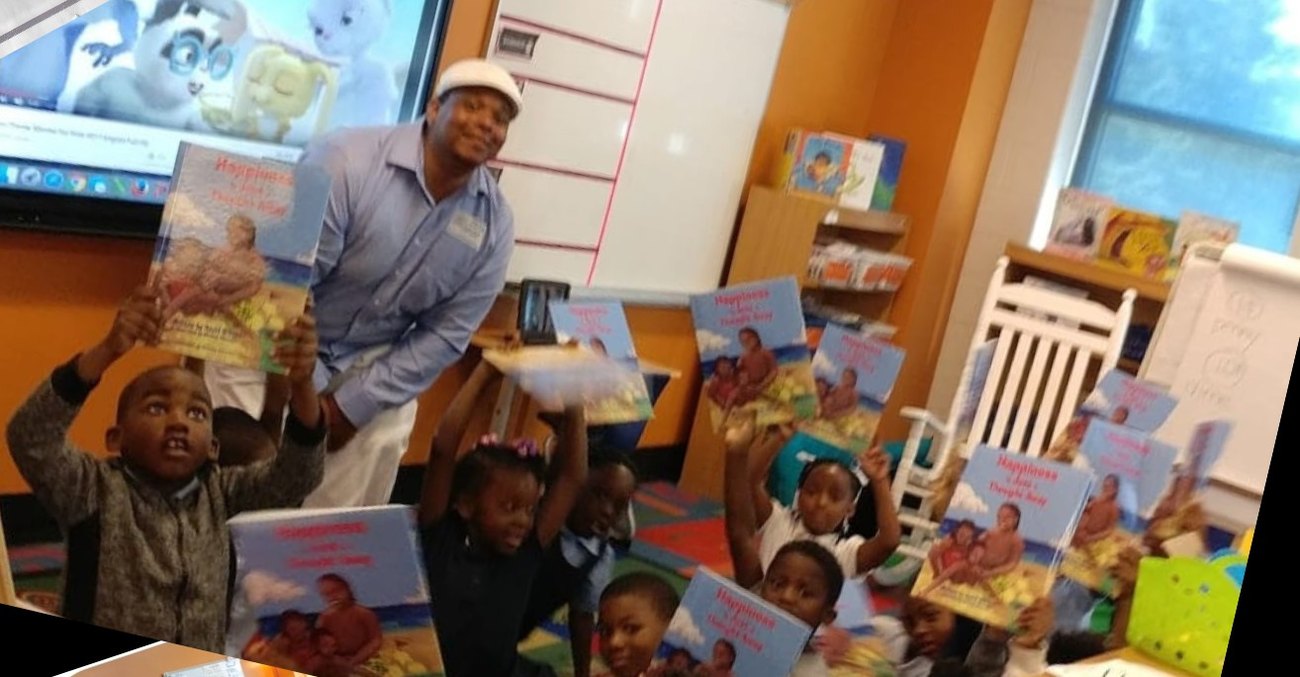
Once it was published I started going out to schools and libraries to read it. I didn't expect that part to become the best part, but it did.
Press
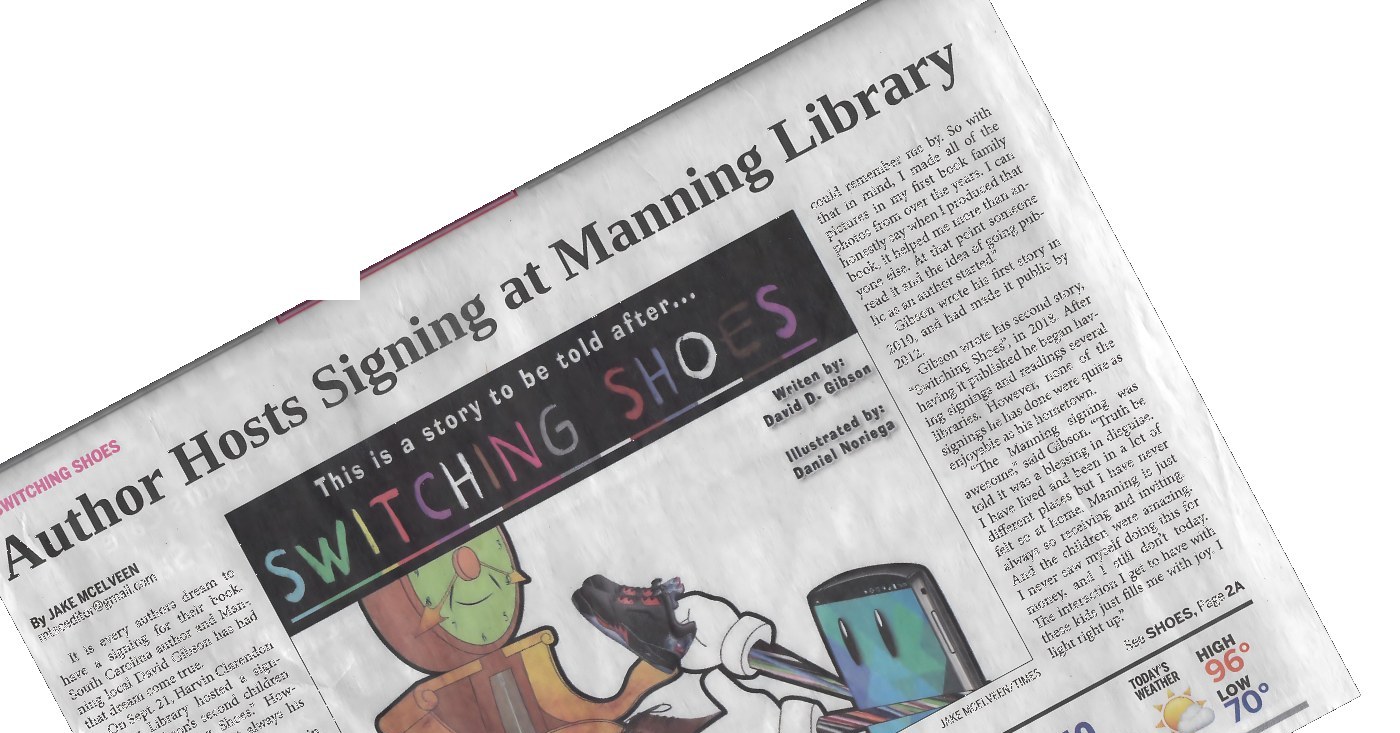
The signing at Manning Library was different. I've lived in a lot of places and I'd never felt at home in any of them the way I do here. Manning takes you in. It was an honor to sign in my family's hometown.
What it's actually for
I've never seen myself doing this for money, and I still don't.
It's the classrooms. It's watching a kid pick up the book and light up, and getting to be in the room for it. I've got a pile of photographs of children holding that book over their heads.
That's the whole reason there are four books now instead of one.
The games, while we're at it
Unforgettable Media publishes the books and also builds browser games, and the two have started running into each other.
Time Runner is set in the five places from Switching Shoes — the playground, the house, the fair, the school, the city — in the order the book puts them in. A child who's read the book knows exactly where they're standing.
Everything we make runs in a browser, with no download and no account, because a lot of children's only computer is a locked-down school Chromebook and most children's software simply isn't available to them. A game that's just a web page gets around that.
The books
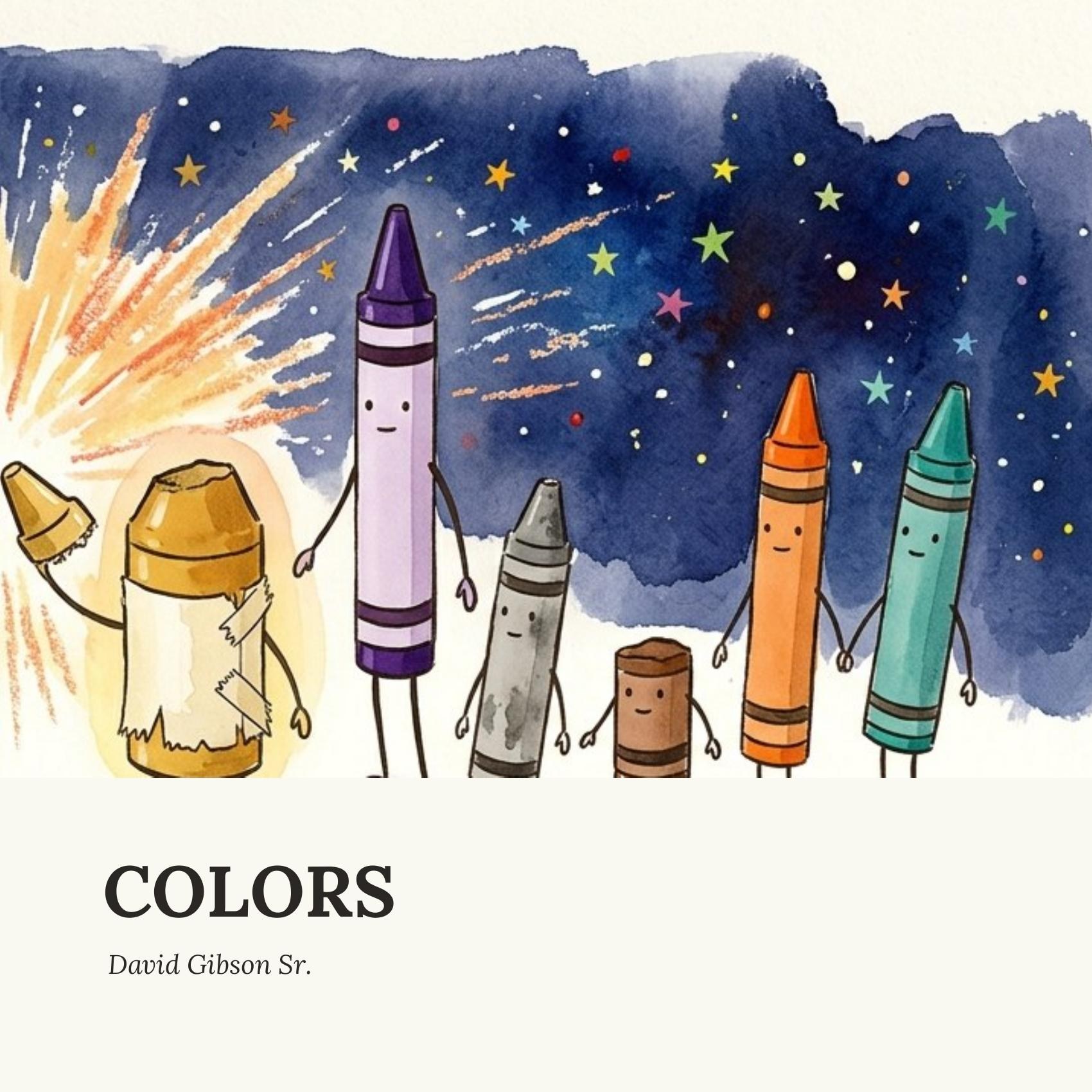
COLORS
A rhyming picture book about why difference exists at all — drawn by the crayons themselves.
By David D. Gibson Sr.
Ages 4–8 · read aloud
Read more
Fruit Super Powers Unite!
Three rhymes about what fruit does for your body, each with its own coloring pages.
By David D. Gibson Sr.
Ages 4–8 · read together, color solo
Read more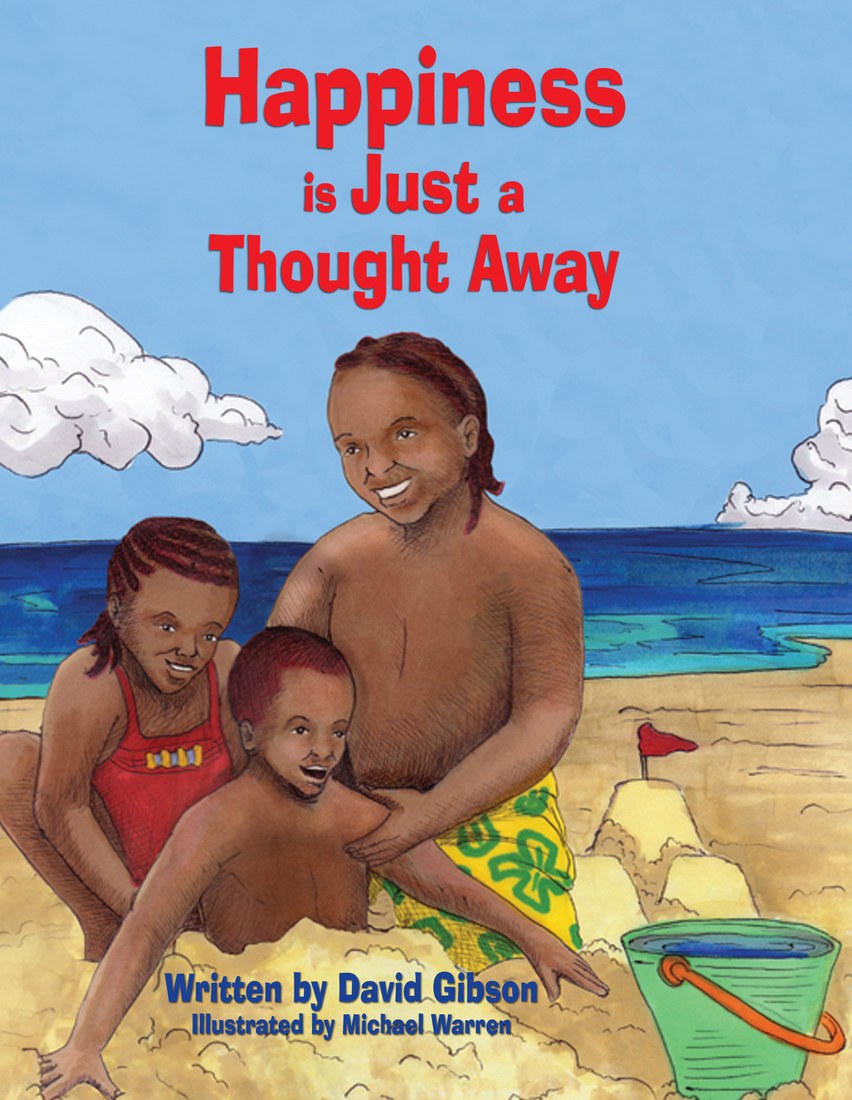
Happiness is Just a Thought Away
Ten questions about things nobody likes, and ten answers that turn them over.
Written by David D. Gibson Sr. · Illustrated by Michael Warren
Ages 4–8 · read aloud
Read more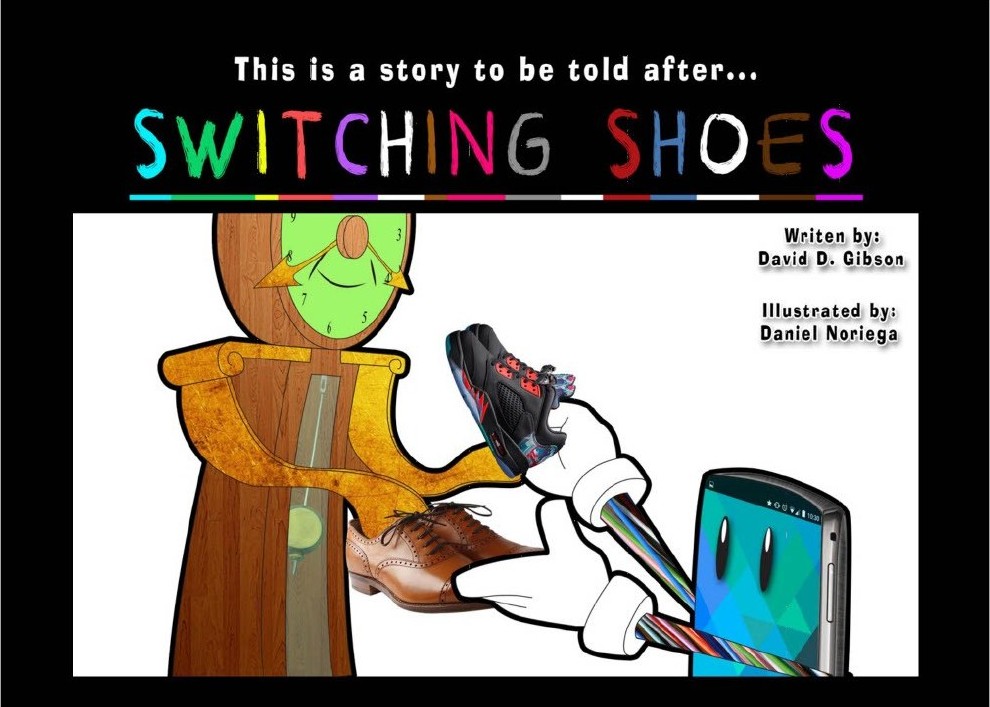
Switching Shoes
This is a story to be told after… switching shoes.
Written by David D. Gibson Sr. · Illustrated by Daniel Noriega
Ages 4–8 · read aloud
Read more
Press and school inquiries
For interviews, review copies, school visits or classroom licensing, email:
play@umedia.fun