When a child asks about difference — loudly, in a supermarket
Small children notice difference early and ask about it at full volume. What you say in that moment matters less than whether you say anything at all.
It happens to everyone. You are in a queue, your child is at eye level with a stranger, and out it comes at a volume that carries: why is that man's skin like that, why is that lady in a chair, why does he talk funny. You feel your face go hot, you say something like shhh, we don't say that, and you steer the trolley away fast.
That reflex is understandable and it is the one thing in the whole exchange that does any damage. Not the question — the question is the most ordinary thing in the world. The problem is what a child concludes from watching an adult panic.
Noticing is not the problem
Children start sorting the world into categories long before they can tie their shoes. They notice hair, height, skin, accents, wheelchairs, hearing aids, who is loud and who is quiet — the same way they notice that some cars are red. It is not a moral event. It is a brain doing exactly what a young brain does, which is find patterns and ask about them.
So a child asking about difference has not done something wrong, and treating it as though they have is where it goes sideways. You are not managing a small bigot. You are answering a question from someone who has been alive for four years and has genuinely never seen this before.
"Shhh" is an answer, and it is the wrong one
Here is the difficulty with hushing: a child cannot hear the distinction you intend. You mean don't ask that here, don't ask it that loudly, let me handle this. What lands is simpler and stickier — that was bad, and we don't talk about it.
A child who learns that difference is unmentionable does not stop noticing it. They stop asking you, which means the next explanation they get comes from a playground, a screen, or their own imagination. Silence is not neutral. It is a lesson, just not the one you meant to give.
Answer the question that was actually asked
Most of these questions are far smaller than the panic suggests. Why is his skin darker than mine is a question about skin, not a referendum on anything, and it has a short true answer: because people come in lots of shades, and his family's is darker than ours. Why is she in a chair — because her legs don't carry her, so the chair does it instead. Done.
Match the size of the answer to the size of the question. A four-year-old asking about a wheelchair does not want a discussion of accessibility; they want to know how the wheels work. Over-answering signals that the subject is fraught, which is the thing you were trying to avoid.
Say it in front of the person, not around the corner
The instinct is to wait until you are out of earshot. Where you can, answer it right there, warmly and at a normal volume. It takes three seconds, it treats the person as someone who can be talked about respectfully in their presence, and it shows your child that no emergency occurred.
If you get it wrong — and you will sometimes — a quick, plain acknowledgment to the person nearby does more good than a perfect answer would have. Most people are far more forgiving of a fumbled sentence than of being hurried past.
Give them the frame before they need it
The supermarket is a bad classroom. It is loud, you are busy, and somebody is listening. The useful work happens earlier, in the calm, the same way it does with every other big idea: build the concept in advance so that the moment only requires you to point at something already there.
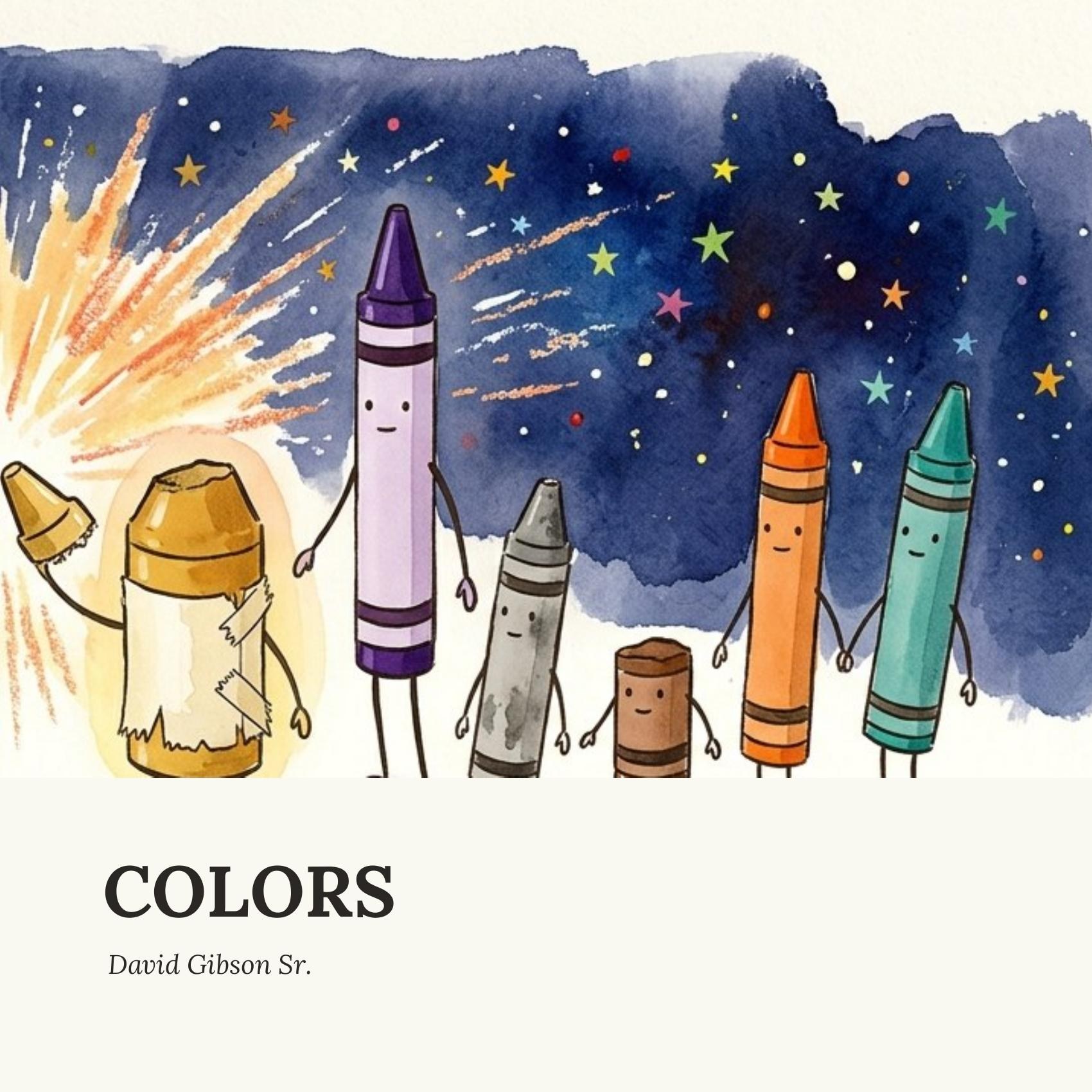
What works at this age is a picture rather than a principle. A rainbow that would be worth nothing with one color in it. A box of crayons where taking any one out leaves a hole in the drawing. A set of characters who are only interesting because they are not the same. Children cannot hold "diversity is a strength" — it is an abstraction made of two abstractions. They can hold a rainbow, and they will hold it for years.
Let stories do the repetitions
This is not a conversation you have once. It is a small idea that needs re-encountering dozens of times in low-stakes settings, and books are the cheapest way to do that. A story lets a child sit inside the idea with nothing on the line — no stranger watching, no chance of getting it wrong out loud.
It also means you are not the sole source. There is a limit to how many times a parent can raise a subject before it starts to feel like a subject. A book raises it for you, at bedtime, while everyone is comfortable, and then you can just read the next one.
What to aim for, realistically
You are not trying to produce a child who never says anything awkward. That child does not exist, and aiming for them mostly produces a child who has learned to go quiet around you.
The goal is narrower and more achievable: a child who thinks difference is interesting rather than dangerous, who knows they can ask you about it, and who has a picture in their head that makes the idea feel obvious rather than instructed. That is a foundation. The more complicated conversations arrive later, and they go much better on top of it.
The question in the queue is not the test. What your child takes from it is whether this is a thing we talk about or a thing we hurry past — and that is decided by your face long before it is decided by your sentence.
So answer it. Answer it small, answer it warmly, and answer it out loud. If the sentence comes out clumsy, that is fine. Clumsy and willing beats smooth and silent every time.