Illustrated picture book
COLORS
A rhyming picture book about why difference exists at all — drawn by the crayons themselves.
By David D. Gibson Sr.
- Ages
- Ages 4–8 · read aloud
- Length
- 32 pages
- Read time
- About 8 minutes
- Difference
- Belonging
- Faith
- Read aloud
About the book
COLORS is a poem, not a story, and it is a religious one. Nearly every line begins the same way — God gave us all different colors — and the book builds its case a couplet at a time: that we were made different so we could see the beauty in one another, not to harm one another; that the earth would be bland otherwise; that we are the salt, the grain and the sand. It says plainly that God divided us by language, not by color.
The dedication sets the tone before the first page: for everyone who has ever been left out of the picture. This is a book about race and difference between people, said in those terms, and it does not hedge.
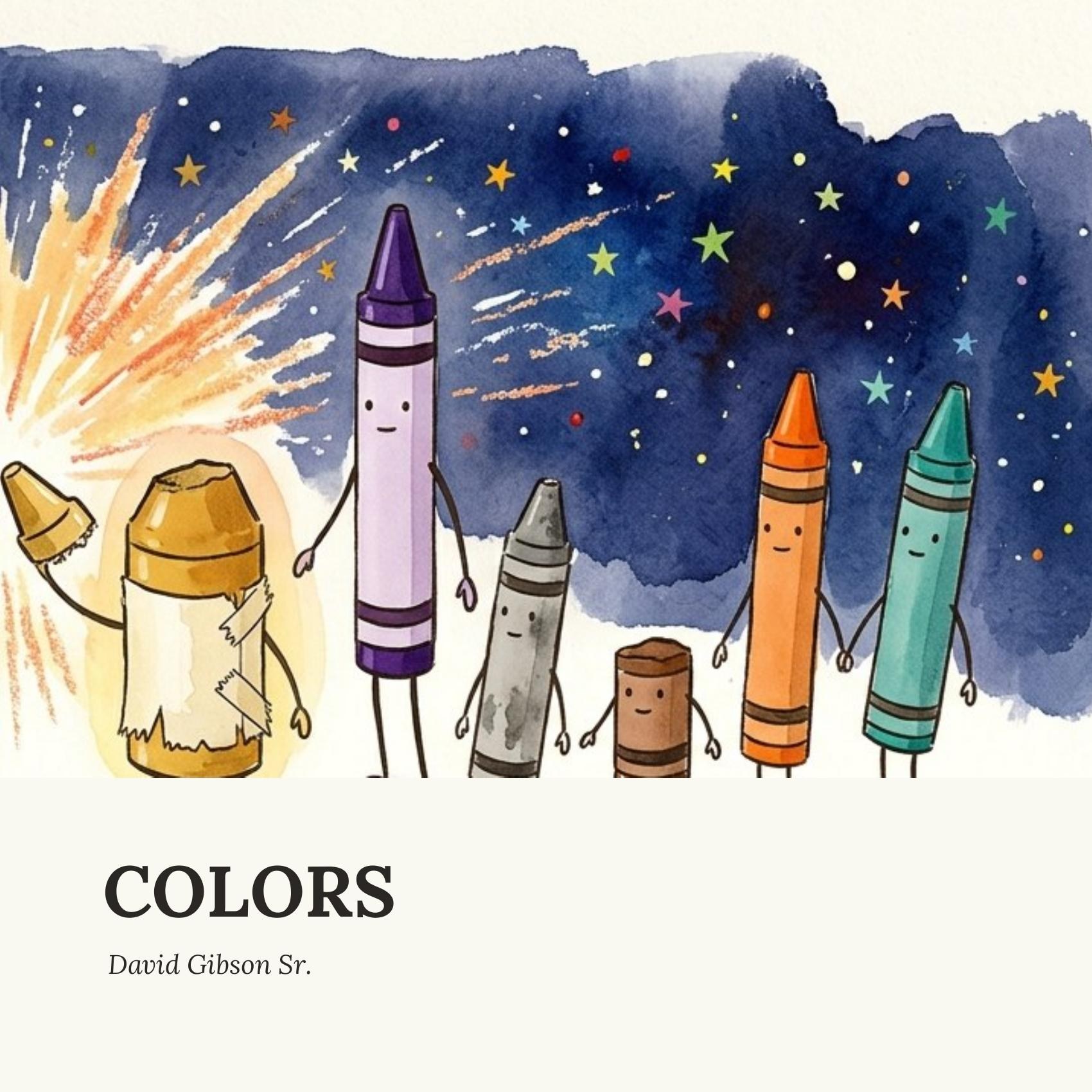
The artwork is built around a cast of crayon characters, and they are drawn doing the work — the crayon on the cover is already worn down to a stub with its wrapper torn. A free eight-page preview of the opening is on the book page if you want to read the voice before buying.
Inside
What's in it
The premise, in couplets
The book opens by putting its cards on the table: God gave us all different colors to be able to see the beauty in one another, and not to harm each other, or our sister and brother. From there it builds in rhyming pairs short enough to read aloud without losing your place.
Said in faith terms, throughout
This is not a book with a faith section. The argument is religious from the first line to the last, which is deliberate, and it is why COLORS suits homeschool, Sunday school and faith-based settings and is a poor fit for a public-school classroom. Better said here than discovered on page four.
The crayons
The illustrations are built around crayon characters, drawn as the ones who made the world they are standing in. The crayon on the cover is already a stub in a torn wrapper.
Questions to ask after reading
You do not need all of these, and you should not work through them like a worksheet — a book that turns into a quiz stops getting requested. Pick one. The conversation it starts is worth more than the answer.
- Why do you think a rainbow needs more than one color in it?
- Look at the crayon on the cover. What do you think happened to it?
- The book says we are the salt, the grain and the sand. What do you think that means?
- It says God divided us by language, not by color. What is the difference?
- If your color was the only one left in the box, what would you not be able to draw?
Notes for the grown-up reading it
It is a faith-framed book, and that is not hidden
The refrain running through this book is that God gave us all our different colors, and the argument it makes about difference is made on those terms throughout. If that is your family's language, it will land as intended. If it isn't, the book still reads perfectly well as a poem about design and intent — but you should know what you are opening before you open it in a classroom or hand it to someone else's child, rather than finding out on page four.
Read it as poetry, not as plot
There is no problem to be solved and no character to root for, which means the usual read-aloud instinct — build tension, hurry to the ending — works against it. Slow down instead. Let each couplet land, give the illustration its few seconds, and resist filling the pause. The book is short enough that going slowly costs you about three minutes.
It is a first conversation, not the whole one
A picture book can make a child curious about difference and can give them a picture to think with. It cannot do the harder work of talking honestly about how difference actually gets treated, and it is not built to. Treat this as the thing you read before that conversation rather than instead of it — the rainbow line is a good handle to reach back for later.
The article that goes with it
Every book here has one piece of writing alongside it, about the real problem the story is circling — no lecture, and you do not need the book to get something out of it.
Raising readers · 6 min readWhen a child asks about difference — loudly, in a supermarketSmall children notice difference early and ask about it at full volume. What you say in that moment matters less than whether you say anything at all.Read the articleMore by David D. Gibson Sr.
About the author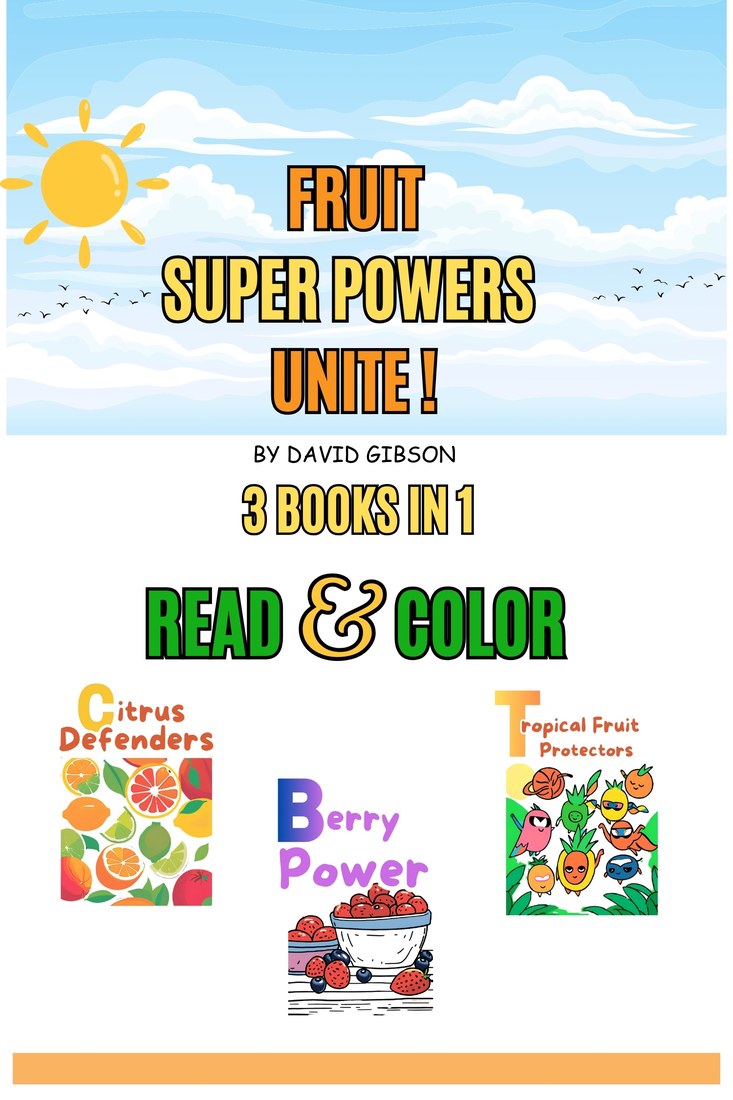
Fruit Super Powers Unite!
Three rhymes about what fruit does for your body, each with its own coloring pages.
Read more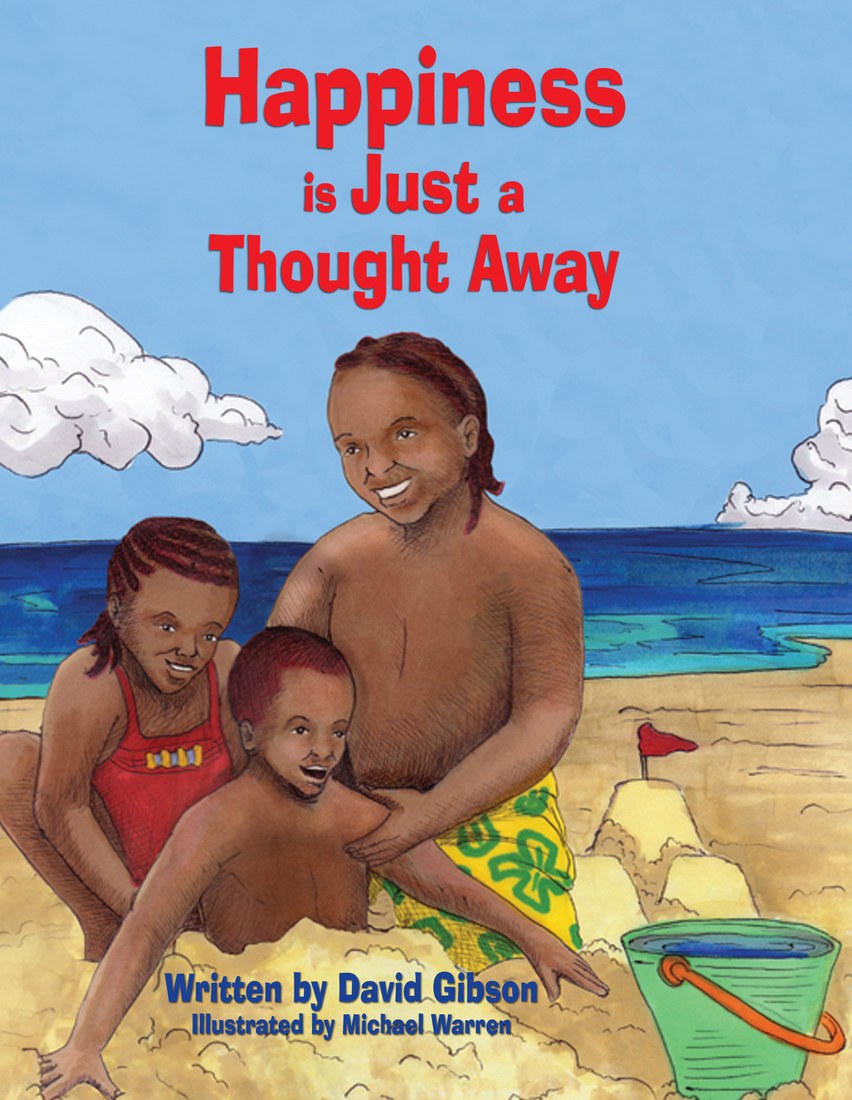
Happiness is Just a Thought Away
Ten questions about things nobody likes, and ten answers that turn them over.
Read more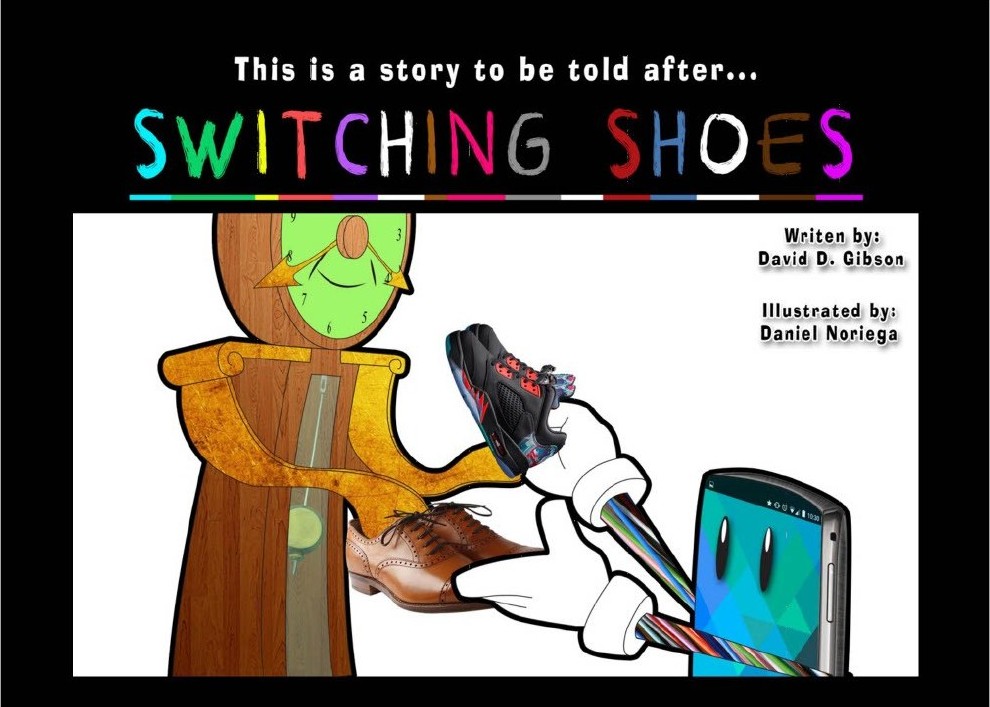
Switching Shoes
This is a story to be told after… switching shoes.
Read more