
Illustrated picture book
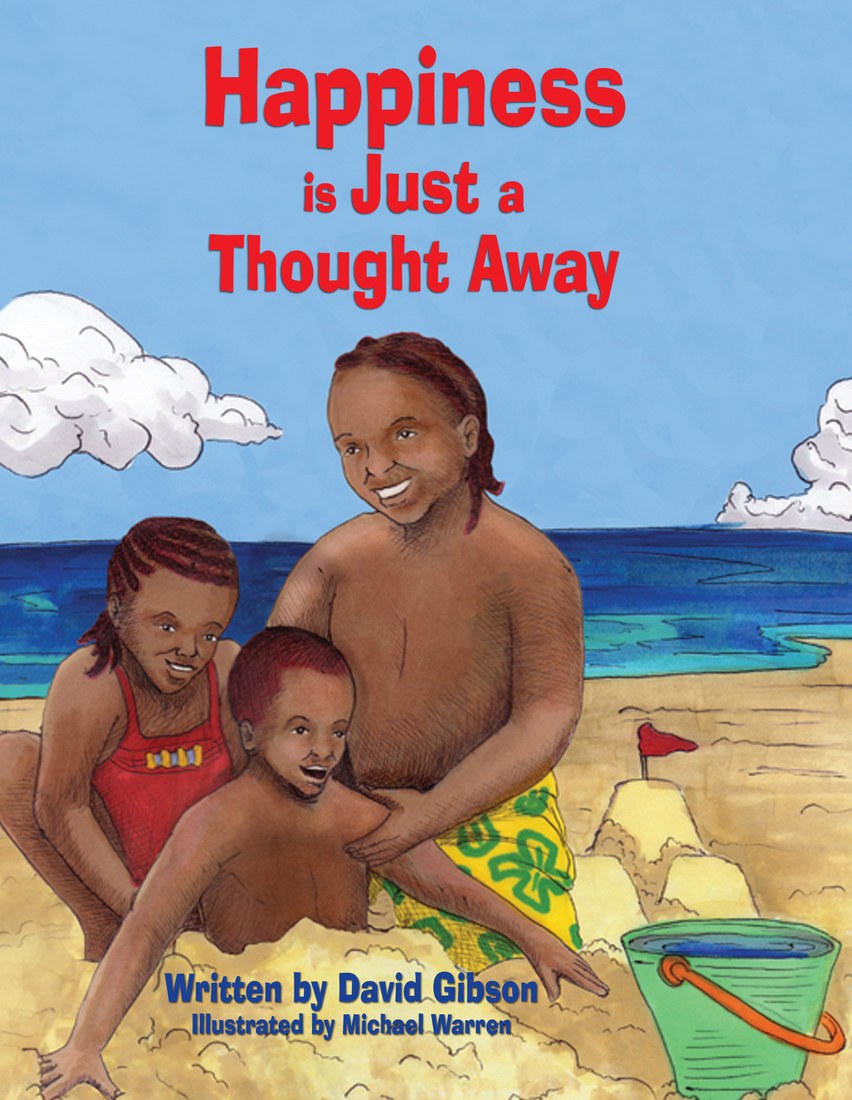
Happiness is Just a Thought Away
Ten questions about things nobody likes, and ten answers that turn them over.
Written by David D. Gibson Sr. · Illustrated by Michael Warren
- Ages
- Ages 4–8 · read aloud
- Length
- 24 pages
- Read time
- About 10 minutes
- ISBN
- Paperback 978-0-9969445-0-2
- Published by Unforgettable Media, a trade name of Unforgettable Enterprises LLC, South Carolina.
- Mindset
- Feelings
- Family
- Read aloud
About the book
The whole book is built on one move, repeated ten times. A page asks a question in the voice a child would ask it — what's so cool about going to school, what's so grand about a cast on your hand, what's so sunny about a rainy day — and the facing page answers it. You'll learn how to use every word, number and tool. Getting to use the other hand to jam out in the band. No bugs to bother you while you play.
It is deliberately not a book about being told to cheer up. Nothing in it denies that the thing is annoying; the question is always allowed to stand. What the answer does is find the second fact about the same situation, which is a thing a child can actually do, where faking a feeling is not. By the tenth spread the pattern is doing the teaching, and most children start answering before the page turns.
There is one more thing about this book that most readers don't know until they are told. The illustrations were created from real photographs of the author's own children, taken when they were young. Michael Warren worked from those photographs, which is why the family in the pictures has the particular unposed quality it does — the wrong-length shadows of a real afternoon, faces caught in the middle of something rather than arranged. It is a family album that turned into a picture book.
Inside
What's in it
Question, then answer
Every spread is a pair. The left page asks, the right page answers, both in rhyme. Ten pairs in all, covering school, not giving up, a cast on your hand, a rainy day, losing a board game, being bored, cleaning your room, making a mess cooking, going to bed and getting up early.
The questions are real ones
They are the complaints a child actually makes, in the words they use. That matters, because a book that asks a question no child has ever asked gets an answer no child is listening for.
The closing page
The book ends by saying the thing it has been demonstrating: when it seems like things aren't going your way, focus on the positive rather than what makes you sad. The dedication at the front says the message is not just for children, and that is fair.
The illustrations
Michael Warren's artwork was developed from photographs of the author's own children. Knowing that before you read changes the pictures; it is worth telling a child once you have read it through together at least once.
Questions to ask after reading
You do not need all of these, and you should not work through them like a worksheet — a book that turns into a quiz stops getting requested. Pick one. The conversation it starts is worth more than the answer.
- Which question in the book was the hardest one to find a good answer for?
- Can you make up a new one? Ask me what's so great about something you don't like.
- Was the answer in the book true, or was it just a nice thing to say?
- Is there something today you could ask that question about?
- The children in the pictures were real children. Do you want to see if we have photos like that?
Notes for the grown-up reading it
What this book is and isn't
This is a picture book about noticing your own thinking. It is not a treatment for anything, and it should not be handed to a child who is genuinely struggling as though it were a solution. If a child is persistently low, withdrawn, or anxious in a way that isn't shifting, that is worth raising with your pediatrician or a school counselor — a story is a good companion to that conversation and a poor substitute for it.
Reading it more than once
On the first read, just read it. On a later one, stop after the question and let them try the answer before you turn the page — by the third or fourth spread most children have the pattern and want a go. Don't do both in one sitting; a book that becomes an exercise the first time through does not get requested again.
The photograph connection
Telling a child that the family in the pictures was a real family, photographed on real days, tends to land hard and well. It makes the book a true story rather than an invented one, and children take advice differently from a true story.
The article that goes with it
Every book here has one piece of writing alongside it, about the real problem the story is circling — no lecture, and you do not need the book to get something out of it.
Feelings · 6 min readWhat to say when a child says "I'm bad at everything"The instinct is to argue them out of it. There is a better opening move, and it starts with not contradicting them.Read the articleMore by David D. Gibson Sr.
About the author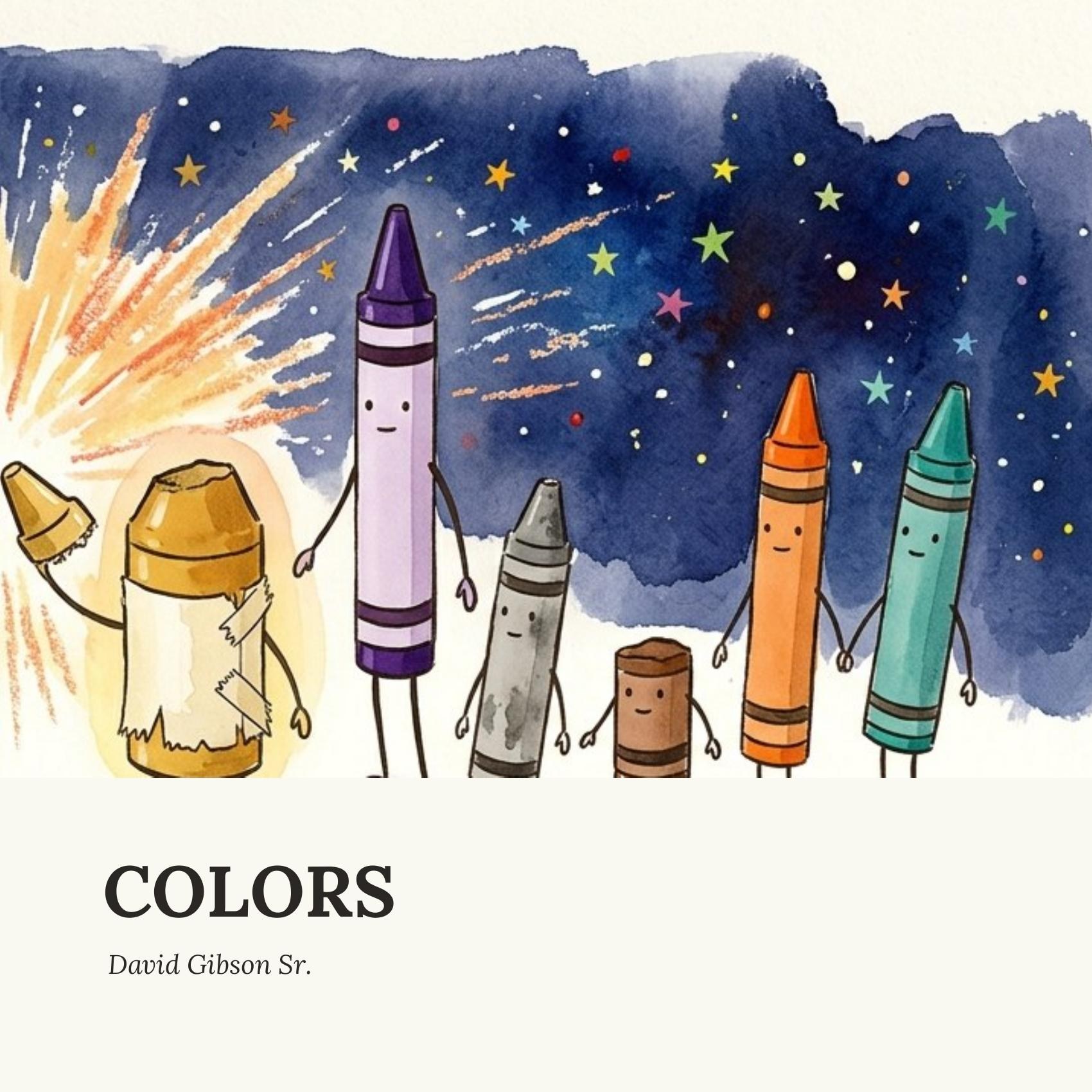
COLORS
A rhyming picture book about why difference exists at all — drawn by the crayons themselves.
Read more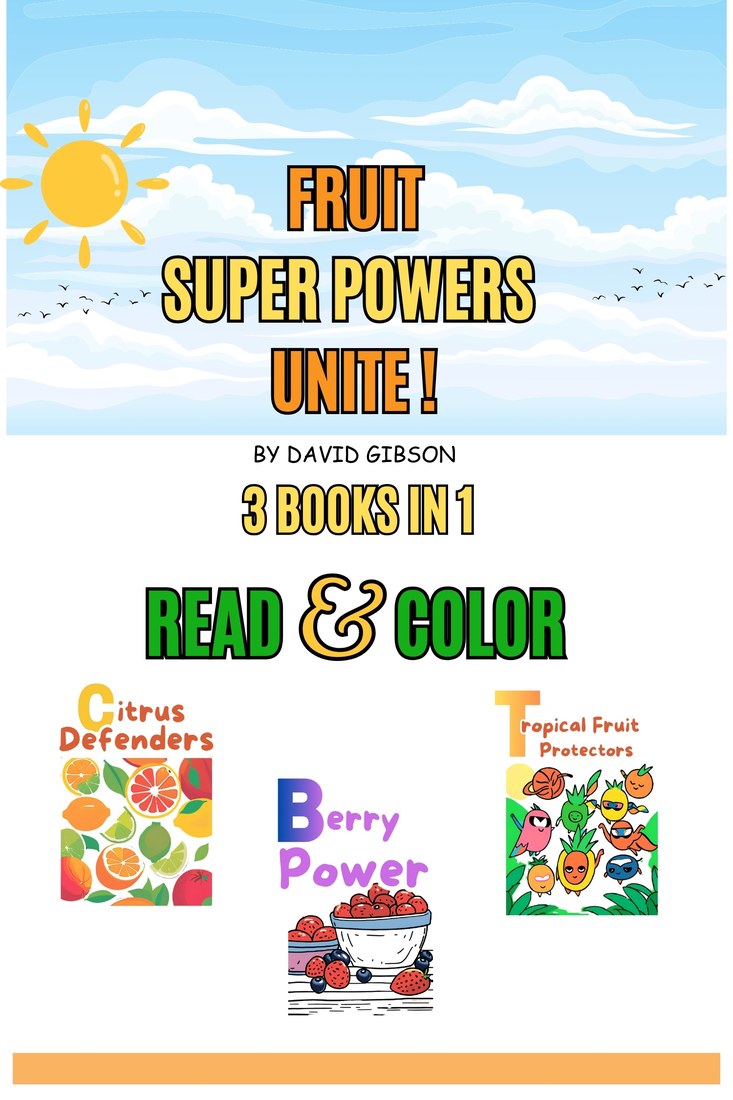
Fruit Super Powers Unite!
Three rhymes about what fruit does for your body, each with its own coloring pages.
Read more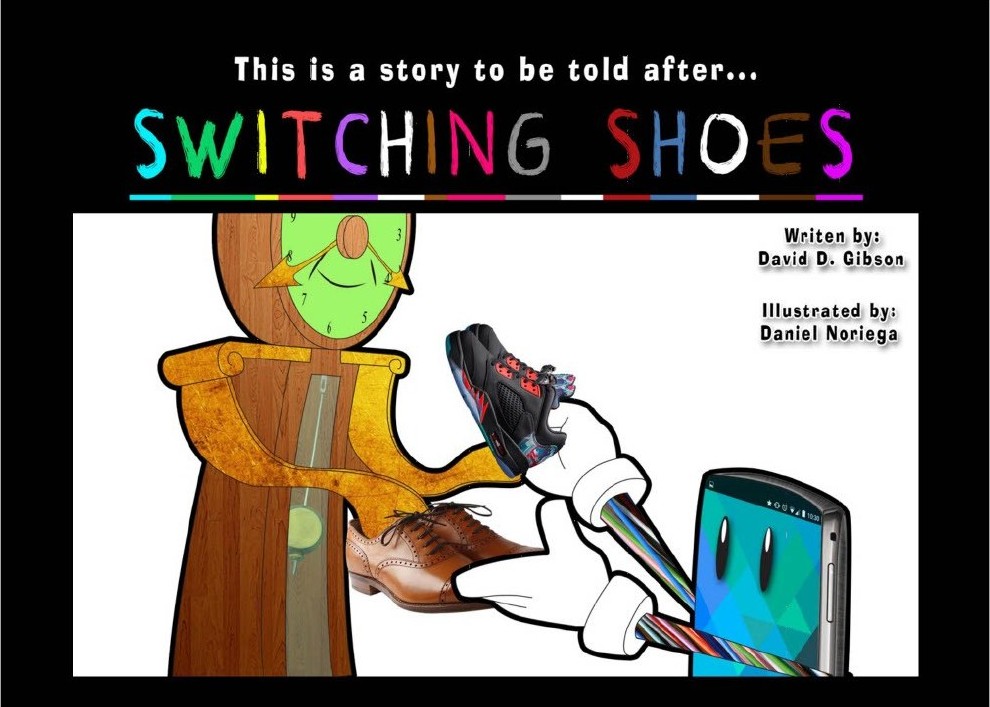
Switching Shoes
This is a story to be told after… switching shoes.
Read more